- Improve Your Volleyball Home
- Coach April's Peace Love Volleyball Mom Shirt Ideas Spring Into Vegas
- Volleyball Training Shop Small Business
- Volleyball Setting Checklists
- Tips For Short Volleyball Players
- The Volleyball Checklist
- Volleyball Consulting For Coaches and Clubs
- How To Coach Girls Volleyball
- Sayings and Quotes
- Sayings and Quotes

High School Volleyball Tips 4 Ways To Improve Volleyball Skills Alone
Use these four ways to improve volleyball tips as helpful hints and lessons on how to play better starting with passing, setting, spiking, digging, blocking and serving.
Are you stuck watching from the bench while other players get more court time?
This guide covers four (4) proven methods to improve your skills. For detailed drills and training plans, check out:
- How to Practice Volleyball Alone - Solo drills you can do at home
- Drills to Improve Volleyball Skills - 12 drills covering all 6 skills
- Workouts to Improve Volleyball Skills - 4-week structured training plan
You show up to every practice. You work hard. You WANT to improve.
But somehow your skills aren't getting better fast enough, and you're watching other players get the playing time you think you deserve.
Here's what I learned after coaching well over 1000 high school volleyball players:
The difference between bench players and starters isn't talent—it's consistent, intentional repetition practice.
Trust me, I know.
You can't control your coach's decisions about who plays and who sits.
But you CAN control your skill development.
And the best part?
You don't need fancy equipment, a private coach, or even a training partner to get dramatically better.
I'm going to show you the exact four (4) methods I used to go from an inconsistent player to a confident starter—and the same system I've used to help hundreds of players earn more court time, make varsity, and even get recruited.
These methods work whether you have 10 minutes before practice or a full hour at home alone after you've finished your homework.
Let's get you off that bench.
With these 4 high school volleyball tips I explain how to improve volleyball skills on your own without the help of your coach in practice and in games.
Plus, I'm including a 4-week progressive training schedule that shows you exactly what to practice, how many reps to do, and how to track your improvement week by week.
4 Ways To Improve Volleyball Skills
Minimize errors but don't be afraid of making mistakes in practice
In high school volleyball when learning the game every player should know they're going to make mistakes. It's a part of the learning process.
The trick is to learn how to be the player that makes the least amount of errors.
But don't be afraid of making mistakes because that's how you learn. Be fearless about trying new things and go for it.
Here's the truth. Your competition is practicing right now. The question isn't whether you should practice—it's whether you're practicing the RIGHT things.
One way to minimize errors and improve your volleyball skills is by practicing your passing technique with wall drills.
How Wall Passing Drills Build Consistency
Set up a target against a wall and practice passing the ball with accuracy and control. Pick a specific spot—a brick, chalk mark, or tape—that anyone can see from across the room.
Stand 5 feet from the wall and complete 3-5 sets of 100 reps. Side-step two feet between sets, then step back and repeat.
Why this works: Daily wall passing keeps your platform angle, ball contact, and control extremely sharp—even when you don't have a partner or court access.
Want the complete system? See our [How to Practice Volleyball Alone] guide for the full 4-week wall passing progression, self-assessment checklists, and position-specific variations for liberos and defensive specialists.
Want the complete wall passing system? See my How to Practice Volleyball Alone guide with the full 4-week progression and self-assessment checklists.
Semi-private training client Amani works on this wall setting drill while on one knee working on building arm strength and set accuracy with alternating one-hand sets.
4 Ways To Improve Volleyball Skills
Support your teammates don't give up on them
The whole idea of supporting or not supporting your teammates comes in many forms...
- from showing up late to practices,
- complaining about playing time,
- to the effort you give in all practices,
- to not being in shape which becomes obvious when your team plays more than 3 sets or has long practices,
- to never giving up in tight games
Always bring your best self to practices and to show up in support of your teammates.
Here's an irrefutable truth:
College coaches watch you just as closely when you're on the bench as when you're on the court.
They're evaluating:
- How you react when a teammate makes an error
- Your body language during timeouts
- Whether you're cheering or sulking about playing time
- How you talk to your parents after games
- How you respond to your coach's instructions
I've seen talented players lose scholarship opportunities because of what they did on the bench, not what they did on the court.
Supporting teammates starts with being reliable yourself.
Here's how to become the setter everyone trusts...
To improve your volleyball skills and support your teammates, you can work on your setting technique.
Find a target, such as a basketball hoop, and practice setting the ball accurately towards the target.
Concentrate on using proper hand positioning and giving your teammates a set they can work with.
Practicing your setting skills will make you a more reliable teammate and improve your ability to assist others during games.
Want to master setting? Check out our How to Practice Volleyball Alone guide for setting progressions and self-assessment checklists, or see Drills to Improve Volleyball Skills for partner setting variations.
While other players might get a break between contacts, setters must be ready to handle the second contact of every rally, turning less-than-perfect passes into hittable balls that give their attackers the best chance to score.
Whether the pass is perfect or off-target (also called "out-of-system"), it's the setter's job to chase down every second ball and create scoring opportunities for their team.
Practicing your setting skills will make you a more reliable teammate and improve your ability to assist others during games. Watch as Anais does her wall setting with footwork movement during one of our private training sessions.
4 Ways To Improve Volleyball Skills
Take RISKS!...in tight games
or on game point
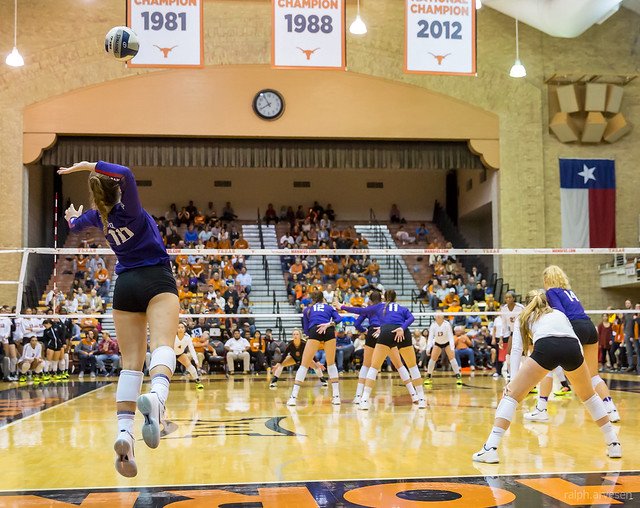
Tough volleyball serves work as the game's "equalizer" because from start to finish you control every aspect and especially the outcome of the serve.
If you're willing to take risks in practice then you'll be preparing yourself to be confident enough to take risks during match point and during tight moments in games.
Learning to be the top scorer on your team means you need to be
- willing to call for the ball,
- want the ball, or
- demand the ball from your setter in tight situations
especially in moments where everyone else may be afraid to do so.
College volleyball demands peak fitness which is why the collegiate volleyball athletes who are home for the summer already participate in their own strength training regimen that their college coach requires them to follow.
In practice ask for balls and keep asking for balls from your setter, repeatedly. This will help you face your fear of hitting for points for your team when it really really counts.
Here's what separates good players from great ones: Great players WANT the ball when the game is on the line.
They've practiced taking risks so many times in training that game pressure doesn't shake them—it energizes them.
You know what I see all the time?
Players who crush it in practice but shrink in tight game moments because they've never practiced being uncomfortable.
The solution? Make your solo training sessions uncomfortable on purpose.
Build Unshakeable Hitting Skills
The most common volleyball offense strategies set to the left side:
The "Hut" - a medium high/medium speed rainbow shaped set that fails inside the left antenna after peaking 5-6 feet above the net
The "Go" - a fast speed/low set with little-to-no-arc that falls inside the left antenna after peaking 3-5 feet above the net
In tight games or on game point be willing to take risks
To be more confident in taking risks during crucial moments in games, focus on improving your spiking skills.
Set up a target or a net and practice your approach and spiking technique.
Work on hitting the ball with power and accuracy, targeting specific spots on the court.
By practicing your spiking on your own, you'll become more comfortable and assertive in taking risks during games.
Want the complete hitting system? See our How to Practice Volleyball Alone guide for approach footwork progressions and self-toss spiking drills, or check out Drills to Improve Volleyball Skills for target spiking variations.
Serving: Your Secret Weapon
Here's why serving is the BEST skill to practice alone: You control everything. The toss. The contact. The target. The outcome.
While your teammates need a partner to practice passing or setting, you can become a serving ace completely on your own.
Practice serving to specific zones, track your accuracy, and create pressure scenarios ("I must make 8/10 serves or repeat the set"). This builds the confidence you need to serve aggressively at match point.
Want a complete serving system? My Complete Serving System Checklists includes 9 progressive checklists from first serve to college-level serving mastery, or see our Workouts to Improve Volleyball Skills for a 4-week serving progression.
Watch how Brooklyn (big white tshirt right front on the other side of the net) the shorter hitter blocker has to hit past and then block #83....using a quick arm swing, aggressive spike approach and a high reach so she hits the ball before the block stops her.
Volleyball Drills For Hitting: Gorman two-time Gatorade Player of the year and Cal Poly starting left side hitter volleyball player Tommi Stockham (a 3 year client) Works On Transitioning from Outside To Hit A Two Ball
4 Ways To Improve Volleyball Skills
Take action between plays even when you aren't touching the ball
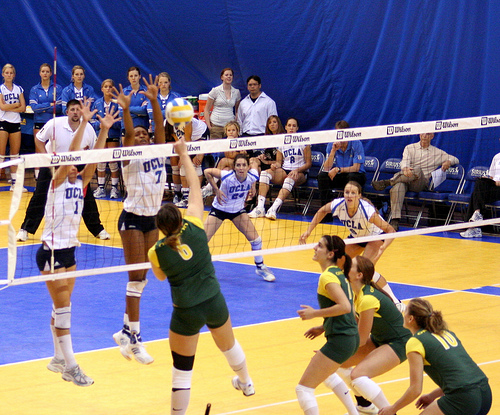
As a high school varsity or JV volleyball player there are many things you can do on the court in a game without touching the ball.
By doing these things you help increase the possibility of your team's success in winning against your opponent.
Here's an irrefutable truth coaches notice immediately: Players who contribute between plays are the ones who earn trust and playing time.
You can't control whether the setter gives you the ball.
But you CAN control
- your effort
- your positioning
- your communication and
- your support
—and coaches are watching ALL of it.
Do you cover your hitters?
Hitter coverage means if you're a defender in the backrow, a setter, or a hitter who hasn't been set the ball... you go to "cover your hitter" who has been set the ball so that when they hit the ball, if they get blocked, you and the other five players who are not actually hitting the ball...are positioned in a semicircle around the player who is hitting, so one of you five can get the ball up again in the air so its replayed before the ball hits the floor.
This way by "covering your hitter" you give yourself another chance to run your offense and replay the ball again.
One of my pet peeves is when a setter sets the ball and just watches their set to see what happens next instead of following the path of the ball towards their hitter and going immediately into covering their hitter so if the ball gets blocked they are in position to replay it up again.
Who Are You and What Do You Do on the Bench?
College coaches come to watch potential recruits when they are off the court and not playing just as much as they do when they are on the courtDo you yell, scream and cheer to support your teammates on the court or are you quiet and thinking about complaining to the coach about playing time?
College coaches come to watch potential recruits when they are off the court and not playing just as much as they do when they are on the court...so they know more about who the player is ..when they are not in the game.
- How supportive or selfish they are.
- How they talk to their parents
- What their body language is and
- how they listen to their high school coach's instructions
Real talk: I've personally seen college coaches cross players off their recruiting lists because of what they saw on the bench.
One player—incredibly talented—lost a scholarship opportunity because a college coach watched her roll her eyes when a teammate made an error.
Another player—good, not great—earned a roster spot because the coach saw her cheering louder than anyone else despite not playing a single point that match.
Your behavior on the bench is a skill you can practice just like passing or setting.
Practice This: Defensive Skills You CAN Train Alone
When you're not touching the ball, you can still contribute to your team's success by improving your defensive skills.
Use a wall to practice your digging technique on your own. Focus on moving quickly to the anticipated landing spot of the ball and using the correct form to dig the ball up.
By honing your defensive skills, you'll be able to provide better coverage for your team and increase the likelihood of winning rallies.
Want defensive drills? See our Drills to Improve Volleyball Skills page for digging progressions and reading drills, or check out How to Practice Volleyball Alone for solo defensive reaction training.
How to Dig in Volleyball:
To dig a volleyball up in defense you keep an attacked ball by the opposing team off your court floor by extending your arms and hands under the ball to deflect it back in the air before it hits the floor.
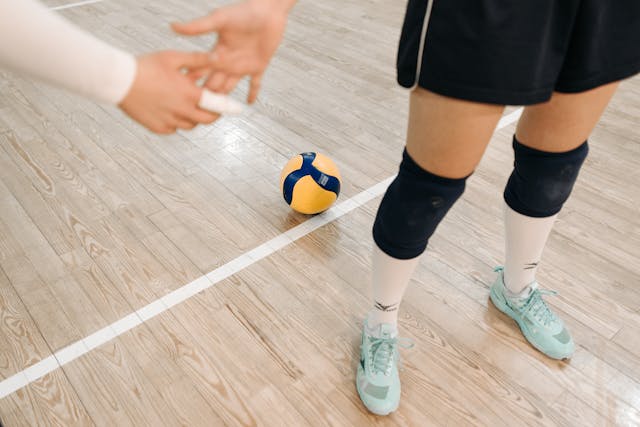 You don't need expensive equipment to improve, but a few smart investments make a difference: kneepad volleyball taped finger high school volleyball player
Check out my complete Training Equipment List where I share exactly what I use with my players—budget-friendly options that actually work.
By incorporating these specific drills and exercises into your individual practice sessions, you can enhance your volleyball skills and make significant improvements.
Remember to always focus on proper technique and practice with intention to maximize your progress.
But here's the thing: Random practice without a plan leads to random results.
That's why I created a complete system to take the guesswork out of your training...
Your Complete 4-Week Skills Improvement System
You now have four proven methods to improve your volleyball skills:
- ✓ Master the fundamentals through consistent wall drills and self-assessment
- ✓ Support your teammates by becoming reliable in your role
- ✓ Take calculated risks by practicing uncomfortable situations
- ✓ Contribute between plays through positioning, coverage, and attitude
But knowing WHAT to practice isn't enough—you need to know WHEN, HOW MUCH, and HOW TO TRACK your progress.
Here's Your Week-by-Week
Practice Schedule
The 4-Week Progressive Training System
I've organized these methods into a complete 4-week training system that tells you exactly what to practice each day, how many reps to complete, and how to measure your improvement week by week.
Week 1: Foundation Building (20-25 min/day)
Week 2: Accuracy & Control (25-30 min/day)
Week 3: Speed & Game Situations (30-35 min/day)
Week 4: Performance Testing (35-40 min/day)
See the complete schedule: Workouts to Improve Volleyball Skills
What Results Should You Expect?
- After Week 1:
Noticeable improvement in technique and consistency
- After Week 2:
Increased accuracy and confidence in your skills
- After Week 3:
Faster reactions and better game-speed performance
- After Week 4:
Measurable improvement you can see in practices and games.
Real results from players who followed this system:
"I went from barely making contact on serves to serving 85% accuracy in four weeks." —Megan, HS Sophomore
"My passing improved so much that I moved from JV to varsity mid-season." —Jordan, HS Junior
"The wall drills alone changed my setting. My coach noticed after two weeks." —Taylor, HS Setter
Tools You'll Need
All you need is a volleyball, a wall, and 20-40 minutes per day.
Optional: resistance bands, agility ladder, knee pads.
See the complete equipment list: How to Practice Volleyball Alone
Ready to take action? Choose your path:
- - How to Practice Volleyball Alone - Start training today with no partner needed
- - Drills to Improve Volleyball Skills - Get 12 skill-specific drills
- - Workouts to Improve Volleyball Skills - Follow a 4-week progressive plan
Frequently Asked Questions For Ways To Improve Volleyball Skills
Here's a 10-question content that provides answers on ways to improve volleyball skills:
Question 1: How can I minimize errors and improve my volleyball skills?
Answer: One way to minimize errors is by practicing your passing technique. Set up a target against a wall and focus on passing the ball accurately and consistently.
Question 2: How can I support my teammates and become a better player?
Answer: Always support your teammates and never give up on them. Show up to practices with a positive attitude, give your best effort, and be willing to help and encourage your teammates.
Question 3: How can I gain confidence to take risks during crucial moments in games?
Answer: To gain confidence, practice taking risks in your training sessions. Work on your spiking technique and challenge yourself to go for difficult shots. Over time, you will become more comfortable and assertive in game situations.
Question 4: What can I do to contribute to my team's success even when I'm not touching the ball?
Answer: Take action between plays by focusing on improving your defensive skills. Practice your digging technique and work on quick movements to anticipate the landing spot of the ball.
Question 5: How can I improve my setting skills and become a reliable teammate?
Answer: Find a target, such as a basketball hoop, and practice setting the ball accurately towards it. Focus on proper hand positioning and giving your teammates consistent and usable sets.
Question 6: What can I do to increase my volleyball knowledge and game awareness?
Answer: Watch professional matches, study game strategies, and observe experienced players. This will enhance your understanding of the game and help you make informed decisions during matches.
Question 7: How can I improve my serving skills?
Answer: Practice serving consistently and with different techniques. Work on targeting specific areas of the court, such as the sidelines or deep corners, to keep your opponents off balance.
Question 8: What can I do to enhance my agility and quickness on the court?
Answer: Incorporate agility drills into your training routine. Focus on footwork, lateral movements, and reaction time exercises to improve your overall agility and quickness.
Question 9: How can I improve my communication and teamwork skills?
Answer: Be vocal on the court, communicate with your teammates, and provide clear instructions during games. Practice effective communication during team drills and scrimmages.
Question 10: How can I improve my mental toughness and resilience?
Answer: Develop a positive mindset and practice mental exercises, such as visualization and mindfulness, to improve focus and mental resilience. Additionally, set goals for yourself and work towards achieving them, which will help strengthen your mental toughness.
Remember, consistent practice, dedication, and a growth mindset are key to improving your volleyball skills.
Take The Ways To Improve Volleyball Skills Quiz?
Here's a quiz to test your knowledge on ways to improve volleyball skills:
Question 1: How can you minimize errors and improve your volleyball skills?
a) Practice your passing technique
b) Attend more team practices
c) Avoid taking risks in games
Question 2: True or False: It's important to support your teammates and never give up on them.
a) True
b) False
Question 3: How can you gain confidence to take risks during games?
a) Practice taking risks in training sessions
b) Avoid trying new things and stick to what you know
c) Only take risks when the game outcome is not important
Question 4: What can you do to contribute to your team's success even when you're not touching the ball?
a) Improve your defensive skills
b) Focus on your individual performance only
c) Take a break and conserve your energy
Question 5: How can you improve your setting skills?
a) Practice setting the ball accurately towards a target
b) Ignore practicing setting and focus on other skills
c) Trust your teammates to do the setting for you
Question 6: How can you enhance your agility and quickness on the court?
a) Incorporate agility drills into your training routine
b) Skip warm-up exercises to save time
c) Avoid quick movements to prevent injuries
Question 7: True or False: Watching professional matches and studying game strategies cannot help improve your volleyball knowledge.
a) True
b) False
Question 8: How can you improve your serving skills?
a) Practice serving consistently and targeting specific areas of the court
b) Avoid serving during practice to save energy
c) Use the same serving technique every time to avoid mistakes
Question 9: How can you improve your communication and teamwork skills?
a) Be vocal on the court and practice effective communication during team drills
b) Avoid talking to your teammates during games to stay focused
c) Rely solely on hand signals instead of verbal communication
Question 10: How can you improve your mental toughness and resilience?
a) Develop a positive mindset and practice mental exercises such as visualization
b) Avoid setting goals for yourself
c) Let external factors completely dictate your mental state
Give yourself a point for each correct answer, then check your score below!
Score:
0-3: You have room for improvement! Brush up on ways to enhance your volleyball skills.
4-7: Not bad! You have a decent understanding of ways to improve, but keep learning and practicing.
8-10: Great job! You have a solid grasp of the various strategies to enhance your volleyball skills. Keep up the good work!
Note: The correct answers are:
1. a) Practice your passing technique
2. a) True
3. a) Practice taking risks in training sessions
4. a) Improve your defensive skills
5. a) Practice setting the ball accurately towards a target
6. a) Incorporate agility drills into your training routine
7. b) False
8. a) Practice serving consistently and targeting specific areas of the court
9. a) Be vocal on the court and practice effective communication during team drills
10. a) Develop a positive mindset and practice mental exercises such as visualization
Ready to Take Your Skills to the Next Level?
Choose Your Training Path:
🏐 Want to practice alone?
How to Practice Volleyball Alone - Solo drills, wall progressions, and no-partner training methods
📋 Need specific drills?
Drills to Improve Volleyball Skills - 12 drills covering all 6 skills with step-by-step instructions
📅 Want a structured plan?
Workouts to Improve Volleyball Skills - Complete 4-week training system with daily schedules and tracking
Get the Complete Training System:
✓ Volleyball Skills Checklist Bundle - Self-assessment checklists and progress tracking for all skills
✓ Complete Serving System - 9 progressive serving checklists from first serve to college level
✓ Volleyball Passing Bundle - 6 passing checklists with position-specific training plans
✓ 100 Good Volleyball Tips Ebook - Video demonstrations and position-specific coaching
Check out my Training Equipment List for budget-friendly gear recommendations with no affiliate links—just honest advice from 20+ years of coaching.
Do You Follow Me on Pinterest?
 Private or semiprivate volleyball indoor/sand lessons are an excellent way for young Las Vegas high school volleyball players to quickly improve their individual skills through a private or semi-private coaching experience.
These lessons are conducted by former pro volleyball player, former USA Volleyball High Performance instructor and Evaluator and Tstreet Vegas 18s head Coach April Chapple on a weekly basis.
Sign up now!
Private or semiprivate volleyball indoor/sand lessons are an excellent way for young Las Vegas high school volleyball players to quickly improve their individual skills through a private or semi-private coaching experience.
These lessons are conducted by former pro volleyball player, former USA Volleyball High Performance instructor and Evaluator and Tstreet Vegas 18s head Coach April Chapple on a weekly basis.
Sign up now!Follow me on Pinterest Volleybragswag to improve your game even faster!
I share alot of individual, partner and easy-to-do volleyball serving drills we do in class with my followers.
Many of these volleyball practice drills you can do at home by yourself or try at your next practice with your teammates.
If you're a B team or JV player trying to make varsity next year...your goal should be to complete 1000 reps a day of at least three of the basic skills on your own...volleyball passing, serving and setting should be at the top of the list.
Ways To Improve Volleyball Skills Where Do You Go From Here?
Good times! Where do you need to go now? Here are three options:
- Learn more about the Tips.
- Follow the suggested reading on our Sitemap page Learning How To Play (Sitemap)
- Or visit the pages in the Volleyball Tips section in the drop down menu at the top of the page.
If your athlete struggles with consistent serve receive, gets subbed out, or is overlooked for playing time—this is the fix you’ve been looking for.
Struggling with passing consistency?
I help talented passers tired of getting pulled from games because of inconsistent serve receive skills BUILD passing confidence without expensive private lessons using the same 3-step system that's helped dozens of my athletes get recruited.
Download my eBook for $17.99 and start building the passing confidence that keeps you on the court—and gets you seen by college coaches.

AUTHOR BIO
April Chapple is an elite private volleyball trainer, former USA National Team member, and University of Tennessee Hall of Fame inductee who has coached in Las Vegas for 15+ years, training hundreds of athletes and helping numerous players reach college volleyball, including Division I standouts.
She's also the head coach for girls and boys 18s at Squad VBC and offers coaches consulting on technical teaching and player development. Connect with April on LinkedIn or at ImproveYourVolley.com, where her eye for overlooked talent sets her apart.
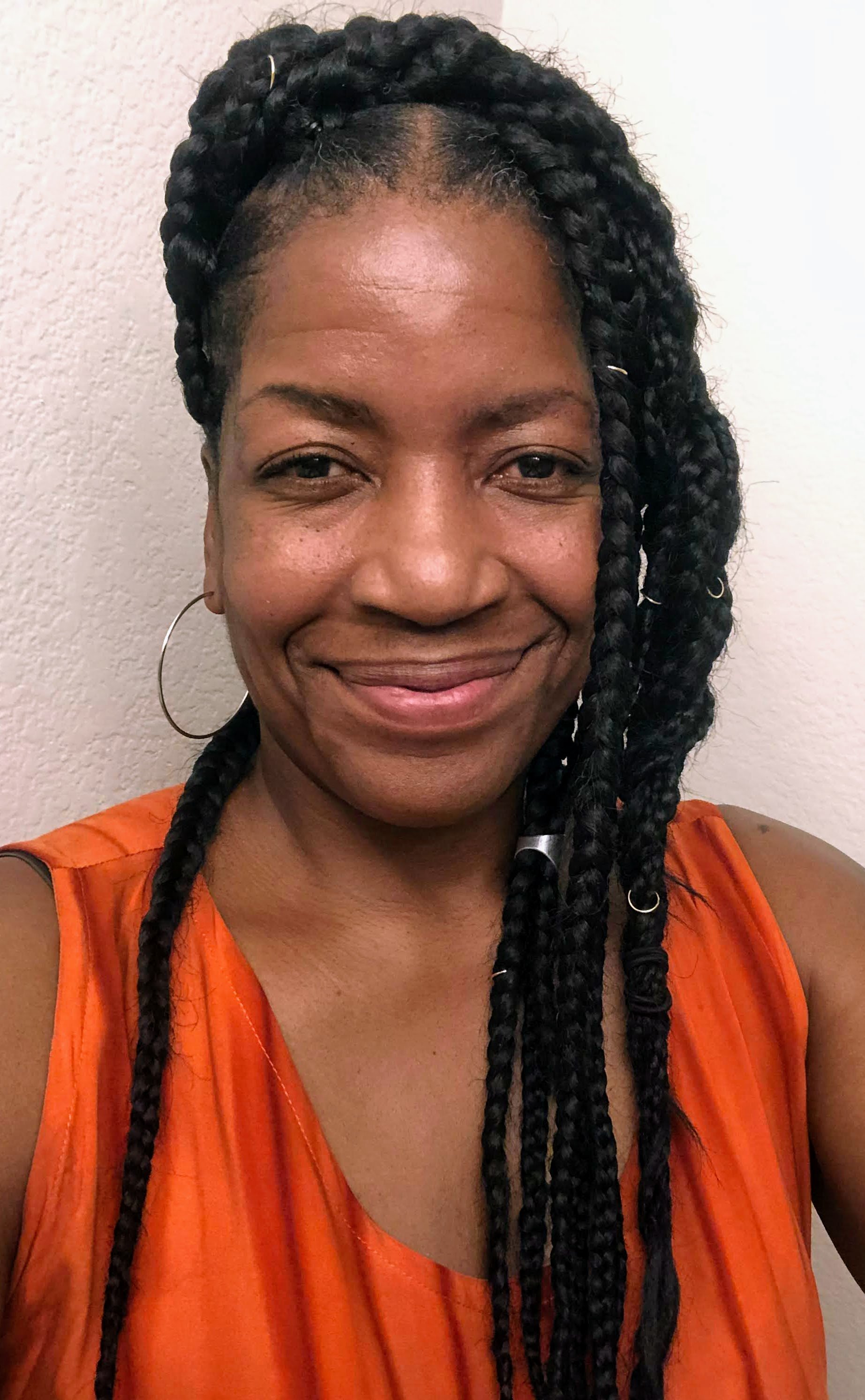
From Lady Vol to Legend: Coach April Honored At UTK Champions Weekend
Lady Vol volleyball legend and record holder Coach April Chapple a University of Tennessee, Knoxville Hall of Fame Inductee, 3-time All American, 3-time SEC Champion, SEC Tournament MVP, 2-time All SEC Team is celebrated with her 1984 SEC champion teammates at Neyland Stadium during Champions Weekend on November 1-2, 2024.

- the first First Round Draft Pick for the first American pro indoor women's league
- named to the first First Team All-Pro team for Major League Volleyball in USA volleyball history
- former USA National team member
- one of the few American women players named as an Italian Pro League D-I Championship Finalist, Italian Cup Finalist and Cup of Cups Tournament Finalist
April Chapple The first First round Draft Pick For Major League Volleyball the first American Women's Pro League Honored At Athlete Unlimited Pro Volleyball Match
Coach April's 2026-27 Private and Semi private Volleyball Training
Pre-Registration now open for 2026-27 Private and Semiprivate Training Sessions with Coach April . Get prepared for club tryouts or train with me during club season!
Email now for information on semiprivate or private indoor skills, individual or small group training volleyball classes and my Breakfast Club for College Players training for 2026-27.
Invest in your improvement while preepping for your next level and college goals while working hard and training smart.
Email me right now to register or for more information.
info@improveyourvolley.com
Affiliate Disclosure
If you make a purchase through a link on my site, I may receive a small commission at no extra cost to you.
As an Amazon Associate, I earn from qualifying purchases. The Amazon Services LLC Associates Program, an affiliate advertising program designed to provide a means for sites to earn advertising fees by advertising and linking to Amazon.com.
I only recommend products that I believe to have good value. Click to read my
Donations Welcome!
If my free social media online training and/or instruction on this site has helped improve your game or meet your goals CLICK the Cash App link below to make a donation!
Thank you!
Can't hire a private trainer?
Get my Targeted Volleyball Checklist Bundles by Skill Level
(only $27 each)
Bundle #1:
Complete Beginner Serving System - $27
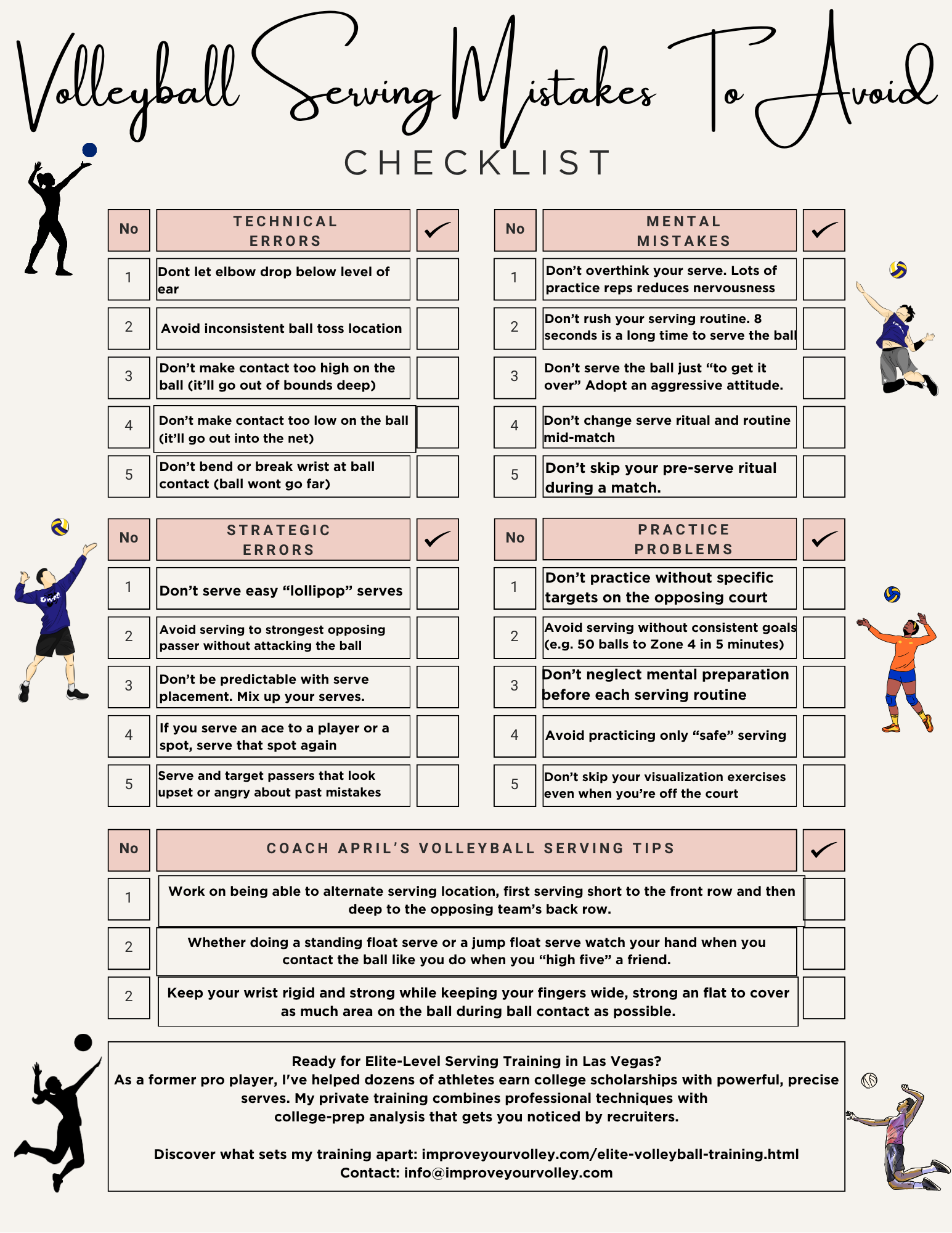
Complete Beginner Serving System: The Ultimate Support System for Beginners
Click to Download Your Pre Serving Ritual Mastery Checklist pdf:
🎯Volleyball Pre Serving Ritual Guide - $7
Transform Your Serve from Weak to Weapon
Stop letting pressure situations destroy your serves?
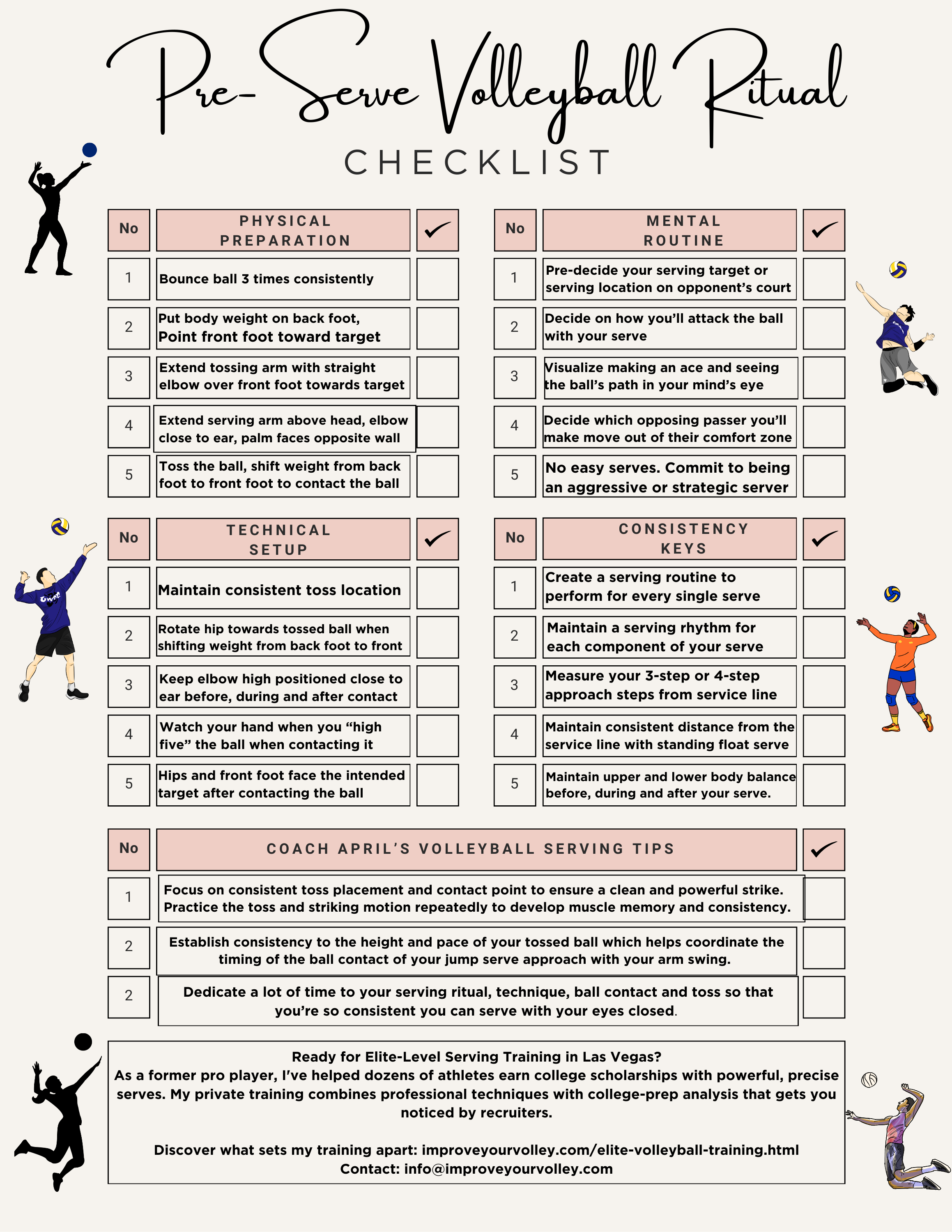
You'll Get
- ✓3-bounce physical preparation setup system
- ✓Mental routine for target pre-selection and visualization
- ✓Technical execution checklist for automatic consistency
- ✓Proven tips for bulletproof toss consistency
- ✓Pressure-proof strategies that eliminate serving errors
Click to Download Your Parent's Volleyball Serving Guide Help Your Player Develop Championship Serves (Even If You've Never Played) Checklist pdf:
🎯Parent's Volleyball Serving Guide Help Your Player Develop Championship Serves Guide - $7
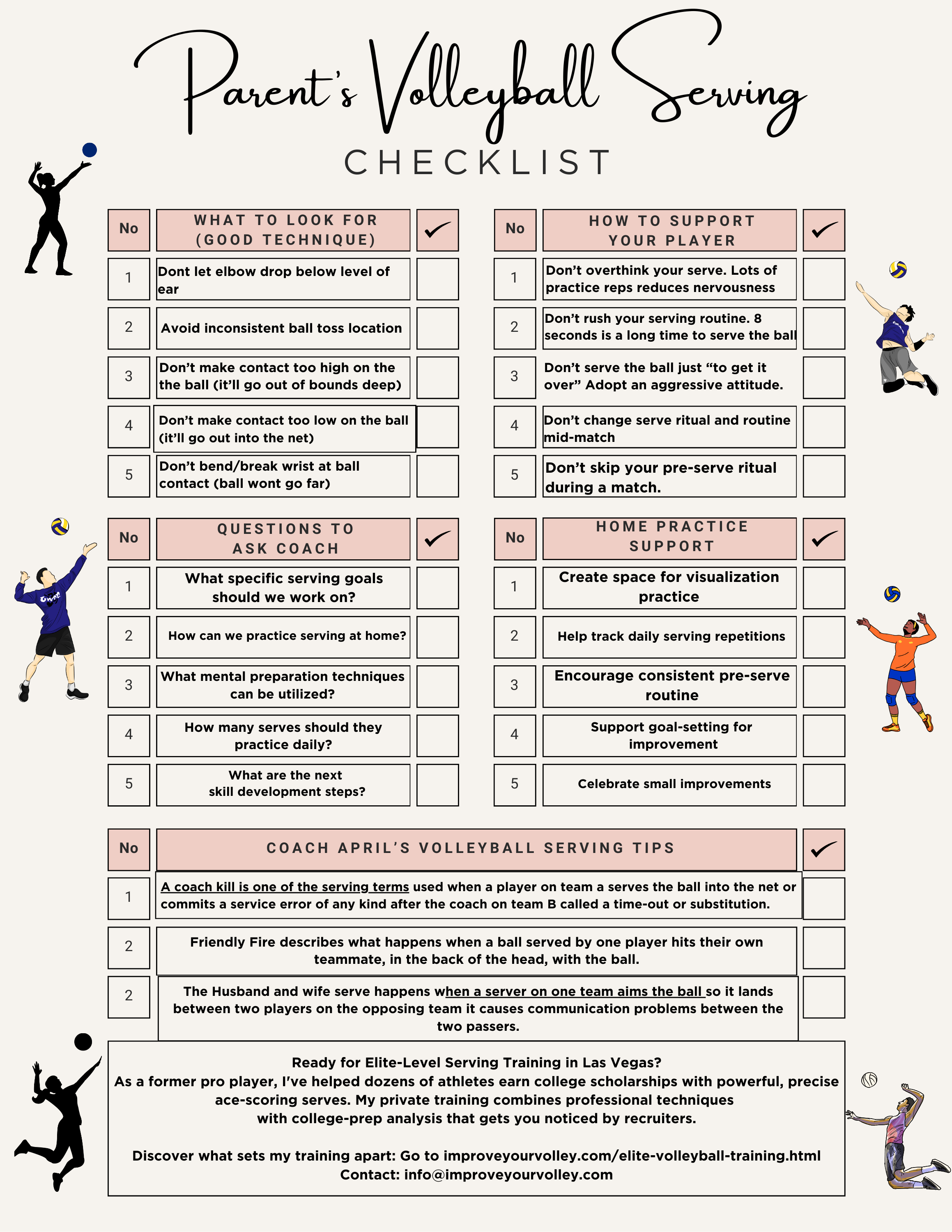
You'll Get:
✓Learn exactly what to look for in your player's serving form so you can provide meaningful feedback.
✓Discover how to provide encouragement that actually improves performance and mental toughness.
✓Know exactly what to ask coaches to show you're engaged and help your player develop properly.
✓Simple, effective drills that don't require a gym or expensive equipment.
✓Understand the language coaches use so you can better support your player's development.
✓Help your player develop the psychological aspects of serving that many coaches don't have time to address.
From Lady Vol to Legend: Coach April Produces Powerful Passionate Players...is that you?
What Are You Looking For?
Click to Download Your Pre Serving Ritual Mastery Checklist pdf:
🎯Volleyball Pre Serving Ritual Guide -
Players! Learn How To Transform Your Serve from Weak to Weapon
Click to Download Your Parent's Volleyball Serving Checklist pdf
🎯Parent's Volleyball Serving Checklist Guide
Parents! Help Your Player Develop Championship Serves (Even If You've Never Played)
Hi there!
Thanks for stopping by. Hope you learned something today that will help you reach your volleyball goals.
Be sure to subscribe to my email newsletter so you can learn more each week!
Stay strong! Stay motivated!
-Coach April

SUSCRIBE to my email newsletter below!

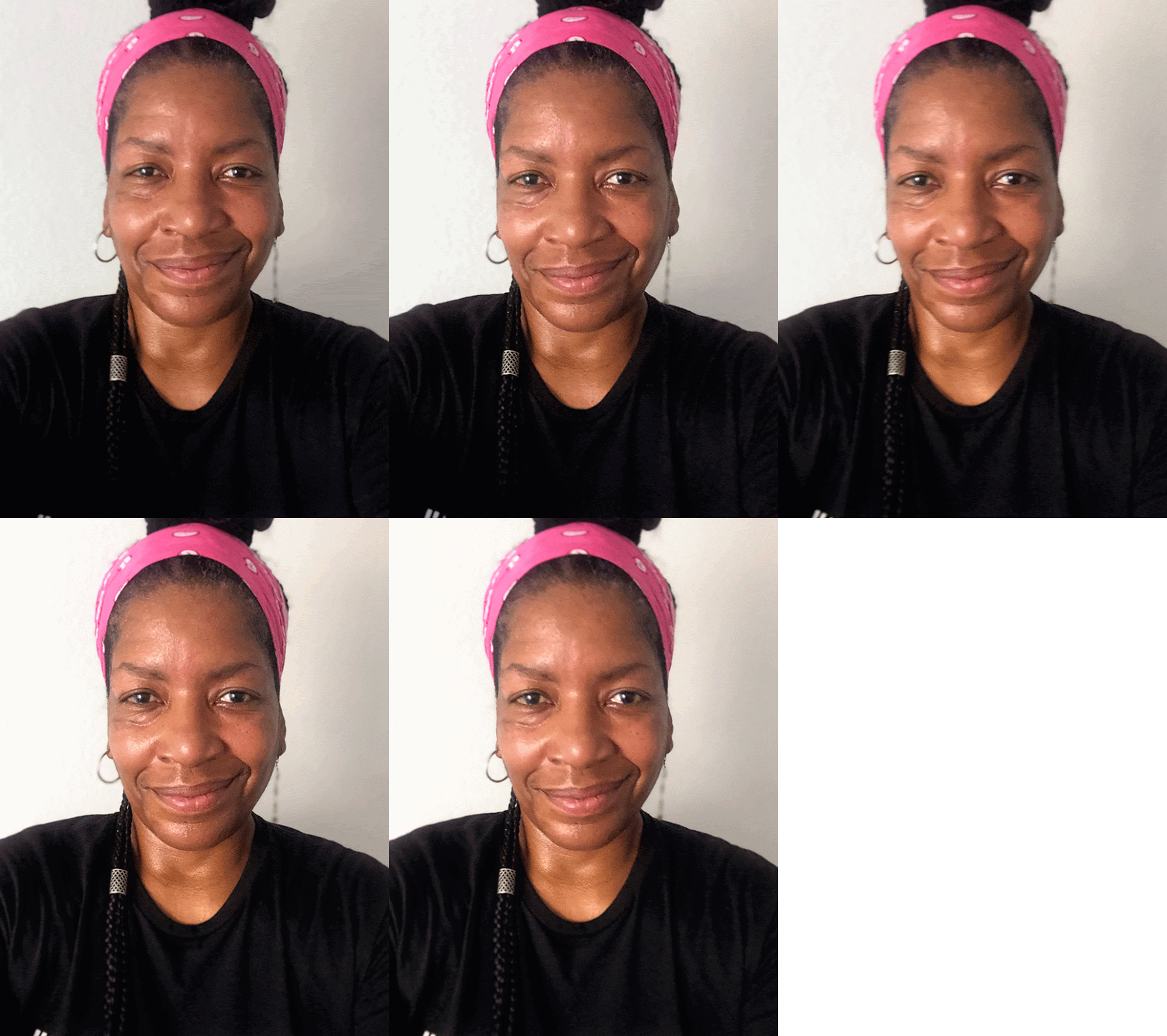
 Click to learn more about the weekly volleyball classes and clinics or email info@imrpoveyourvolley.com for information
Congratulations to my seven Boys-18s Vegas Volley club players who played in two state championship finals yesterday, the 3A and 5A State champinship finals at Sunrise Mountain High School.
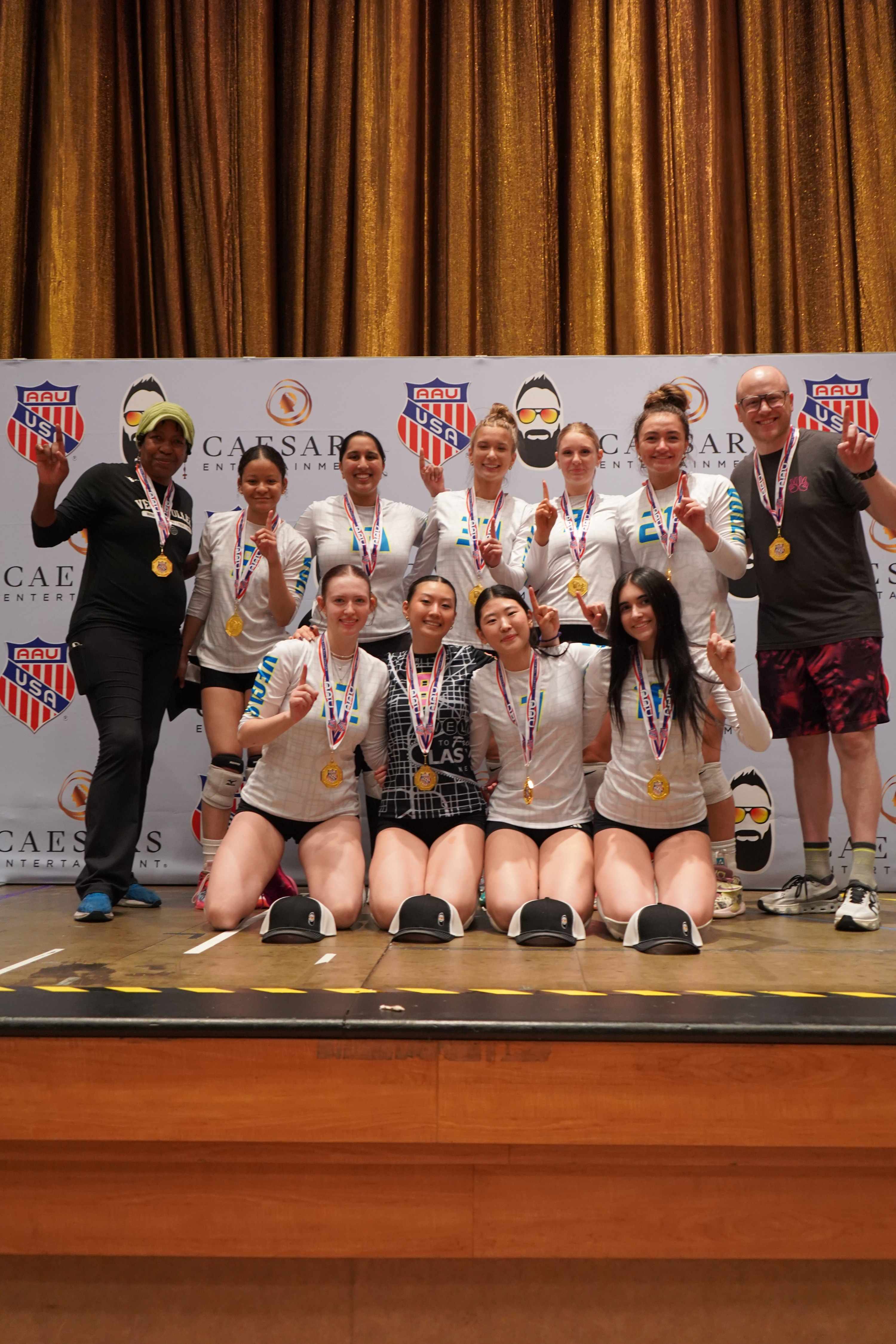
TOURNAMENT CHAMPIONS!
A-1 Vegas Volley VBC
In It To Win It Tournament
May 2 - 4, 2025 Tournament
Gold Medalists
18s Premier Division
Vegas Volleyball's Unsung Heroes: Celebrating Moms with Peace Love Volleyball Shirts



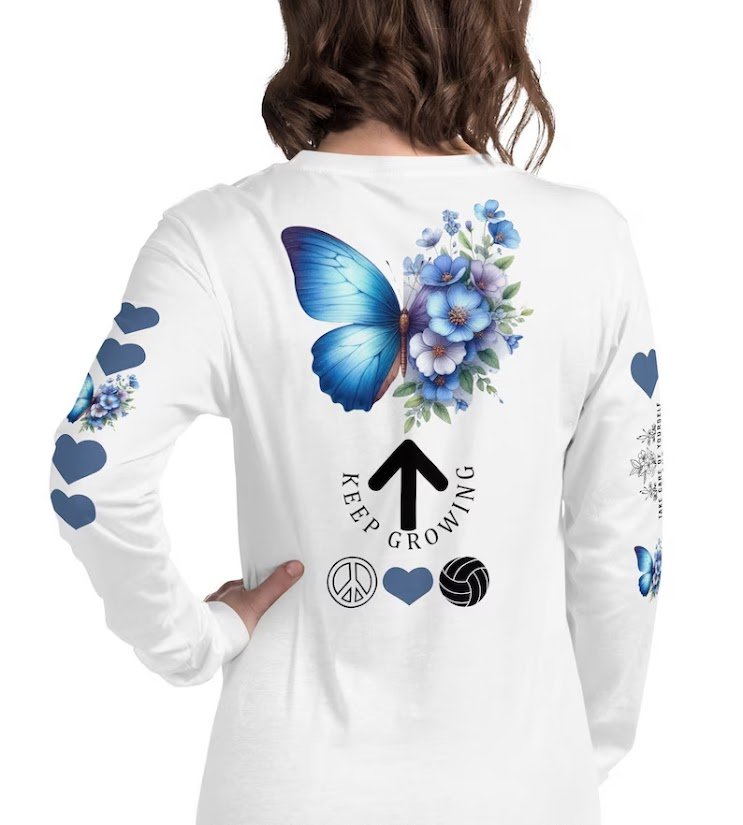
Ready to energize your volleyball mom journey?
Subscribe to my 'Producing Powerful Passionate Peaceful Players' email list above on ImproveYourVolley.com.
You'll receive energy-boosting tips, exclusive insights from me, Coach April Chapple on maintaining momentum in volleyball.
Let's power up the Vegas volleyball scene together!


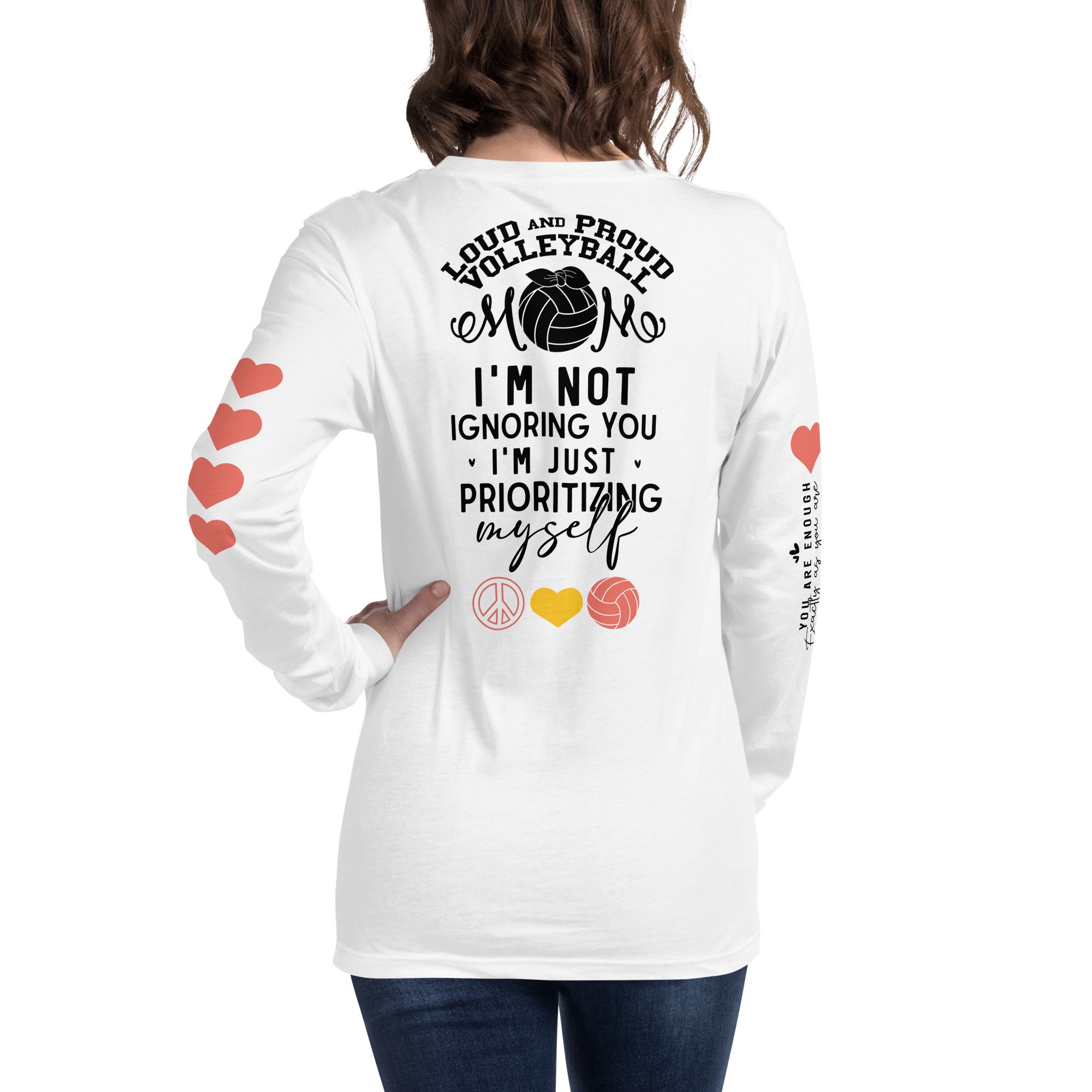



Recent Articles


-
What Is Block In Volleyball A Step By Step Beginner Blocking Tutorial
Jul 03, 26 04:25 PM
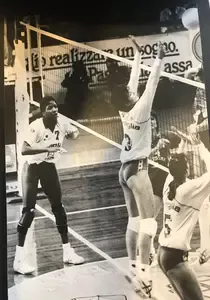 This is my ultimate what is blocking in volleyball guide of 12 actions to take before, during and after your team hits the ball over the net.
 -
How To Block Volleyball Blocking The Correct Ready Position
Jul 03, 26 04:23 PM
 how to block volleyball
 -
Mizuno Wave Volleyball Shoes Have Styles For Specific Player Positions
Jul 03, 26 03:02 PM
 The Mizuno Wave volleyball shoes include styles Mizuno Wave Lightning, Wave Bolt, Wave Tornado, Wave Voltage, Wave Momentum, Wave Supersonic and Wave Luminous